
Discover our complete guide to the best turntable mats for vinyl enthusiasts.
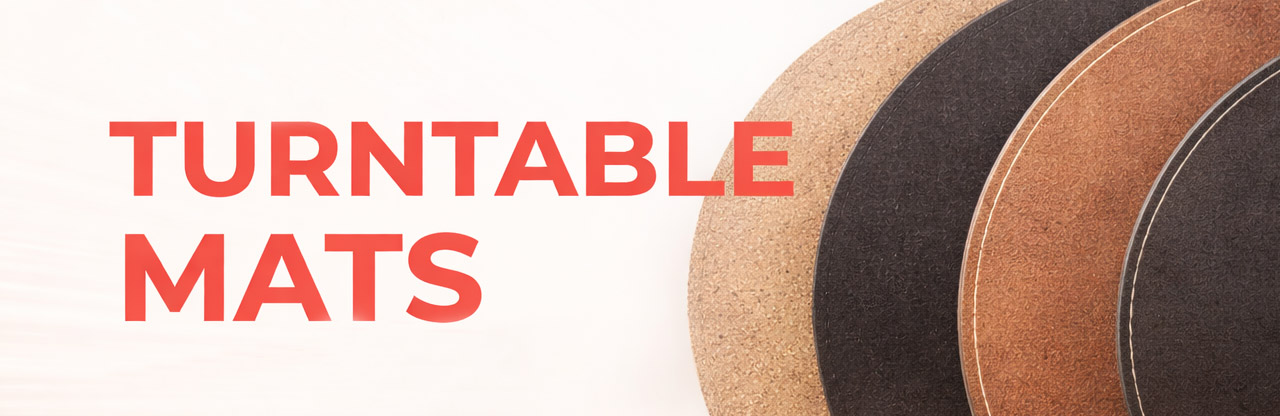
The choice of a turntable mat plays a crucial role in how the record interacts with the platter, directly impacting sound reproduction.
Depending on the material, vibration absorption, stability, and static control vary significantly—resulting in a real difference in listening performance.
Among the most common materials: leather and cork. Two different approaches… and very different results.
Based on typical setups such as the Audio-Technica LP120 and Rega Planar 3:
Cork:
• improves performance compared to felt
• more natural sound than basic mats
• some vibrations remain perceptible
• static charge may still be present
Leather:
• superior vibration absorption
• tighter and more controlled bass
• improved stereo stability
• significant reduction of static electricity
👉 Cork is an improvement. Leather delivers a higher level of control and refinement.
The fibrous structure of leather acts as a natural mechanical damper, allowing it to:
✔ dissipate vibrations instead of storing them
✔ reduce unwanted resonances
✔ minimize static charge
✔ stabilize record-to-platter contact
👉 Choosing a high-quality leather turntable mat is essential.
Low-quality leather mats often lose their natural properties. Full-grain leather (around 2.2 mm thickness) preserves a consistent structure, ensuring stable and long-lasting performance.
👉 This is the level of requirement behind MATTERS®, where material selection is at the core of performance.
• Cork: a solid and affordable upgrade
• Leather: an audiophile-oriented approach
👉 The choice depends on your expectations and the level of sound quality you want to achieve.
The turntable mat is one of the simplest upgrades—with a direct and noticeable impact on playback quality.
A subtle improvement… but clearly audible.
→ Complete Turntable Mat Guide
→ Best Turntable Mat
→ Improve Your Vinyl Sound
Discover our complete guide to the best turntable mats for vinyl enthusiasts.

Tips and techniques to improve your vinyl listening experience with the right turntable mat.
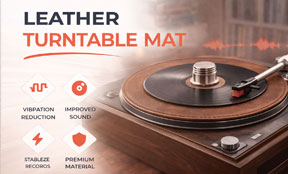
Explore premium leather mats for optimal vibration control and a rich, detailed sound.
Want to publish an article about turntables, share your tips, or collaborate with us? Feel free to reach out!