
Discover our complete guide to the best turntable mats for vinyl enthusiasts.
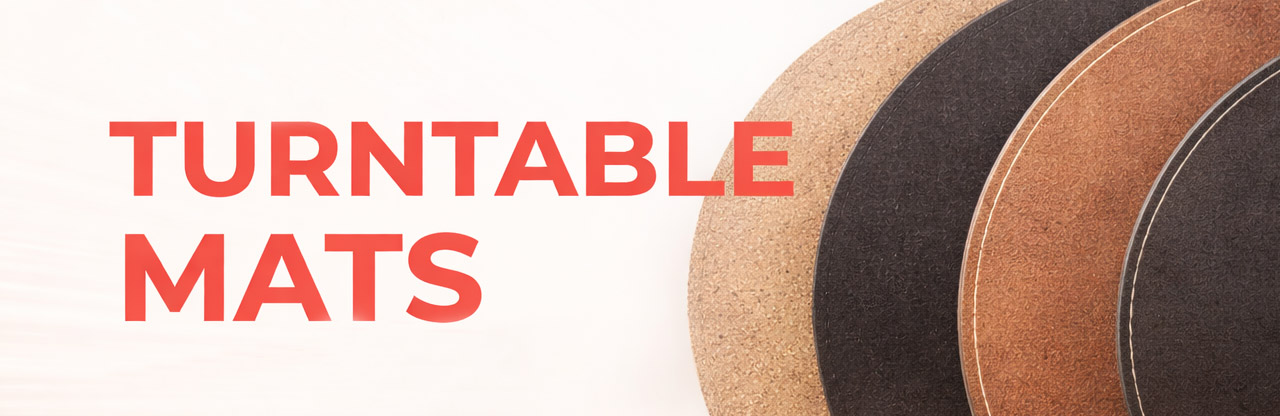
The choice of a turntable mat directly affects how the record interacts with the platter. This often-overlooked component can significantly influence sound quality.
Between felt and leather, two very different approaches emerge: one is standard, the other is focused on controlled and refined playback.
Tests on turntables such as the Audio-Technica LP120 and Rega Planar 3 clearly reveal audible differences.
👉 Felt is practical… but limited.
On an LP120, this often results in a higher noise floor and reduced precision.
👉 Felt mats tend to build up static electricity, attracting dust and increasing unwanted noise.
On a Rega Planar 3, felt can sound slightly “blurred,” while leather delivers a more precise and controlled audiophile experience.
👉 Unlike felt, leather prevents the record from sticking to the surface after playback.
Leather is not just an aesthetic choice—it is a natural material with a structure that directly influences vibration behavior.
Its natural composition allows it to:
✔ dissipate vibrations instead of storing them
✔ reduce unwanted resonances
✔ minimize static charges
✔ stabilize record-to-platter contact
👉 Choosing a high-quality leather is essential.
Not all leather mats are equal. Low-quality products lose part of their natural properties.
Full-grain leather (around 2.2 mm thickness) preserves a consistent structure, ensuring optimal vibration control and long-term stability.
👉 This is the approach behind MATTERS®, where material selection is a key performance factor.
Felt is suitable for DJ use.
Leather is designed for music listening.
👉 If you're looking to truly improve your turntable, the choice becomes clear.
👉 Discover MATTERS® leather turntable mats
👉 Read the complete guide
👉 See the best turntable mats
Discover our complete guide to the best turntable mats for vinyl enthusiasts.

Tips and techniques to improve your vinyl listening experience with the right turntable mat.
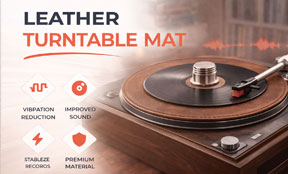
Explore premium leather mats for optimal vibration control and a rich, detailed sound.
Want to publish an article about turntables, share your tips, or collaborate with us? Feel free to reach out!